
Introduction

As conversational AI continues to evolve, developers now have a powerful suite of tools at their disposal to create next-generation chatbots. OpenAI's Chat Completion API and LangChain stand out as two of the most effective frameworks for building sophisticated AI-driven applications. In this article, we dive deep into a comprehensive comparison between these two platforms to help you make an informed decision on which one best fits your needs in 2026.
OpenAI Chat Completion API
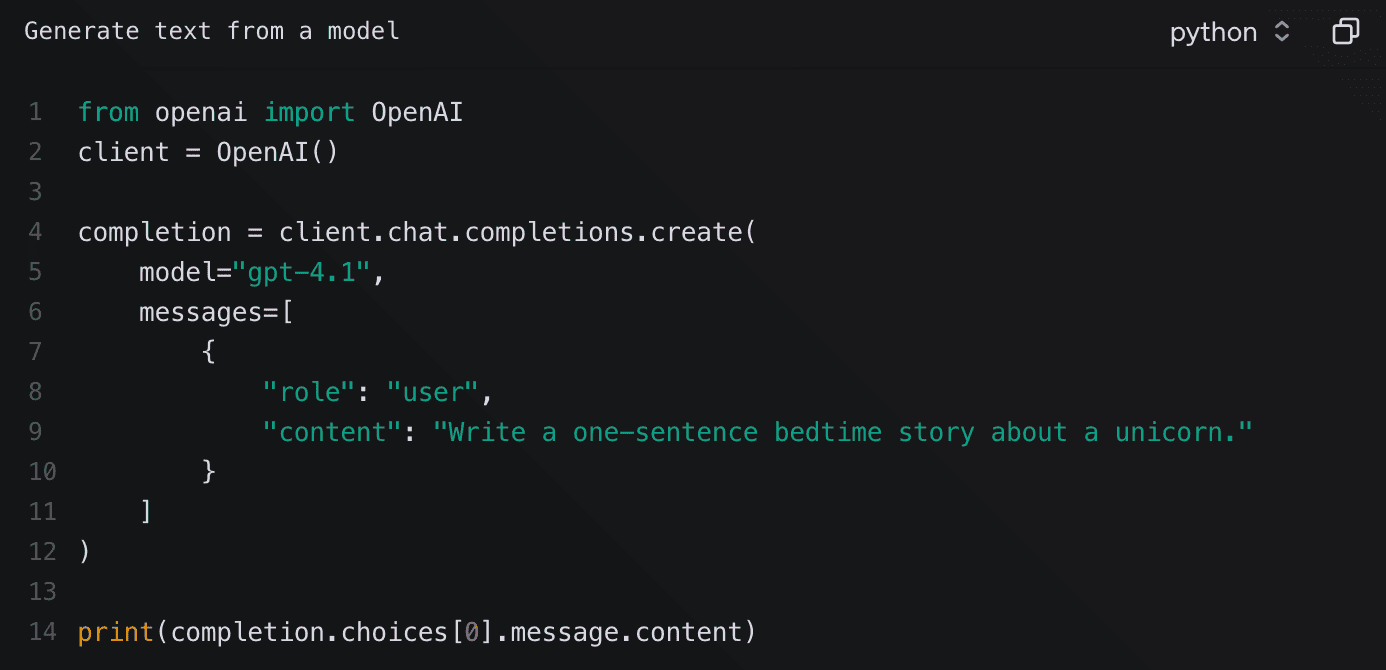
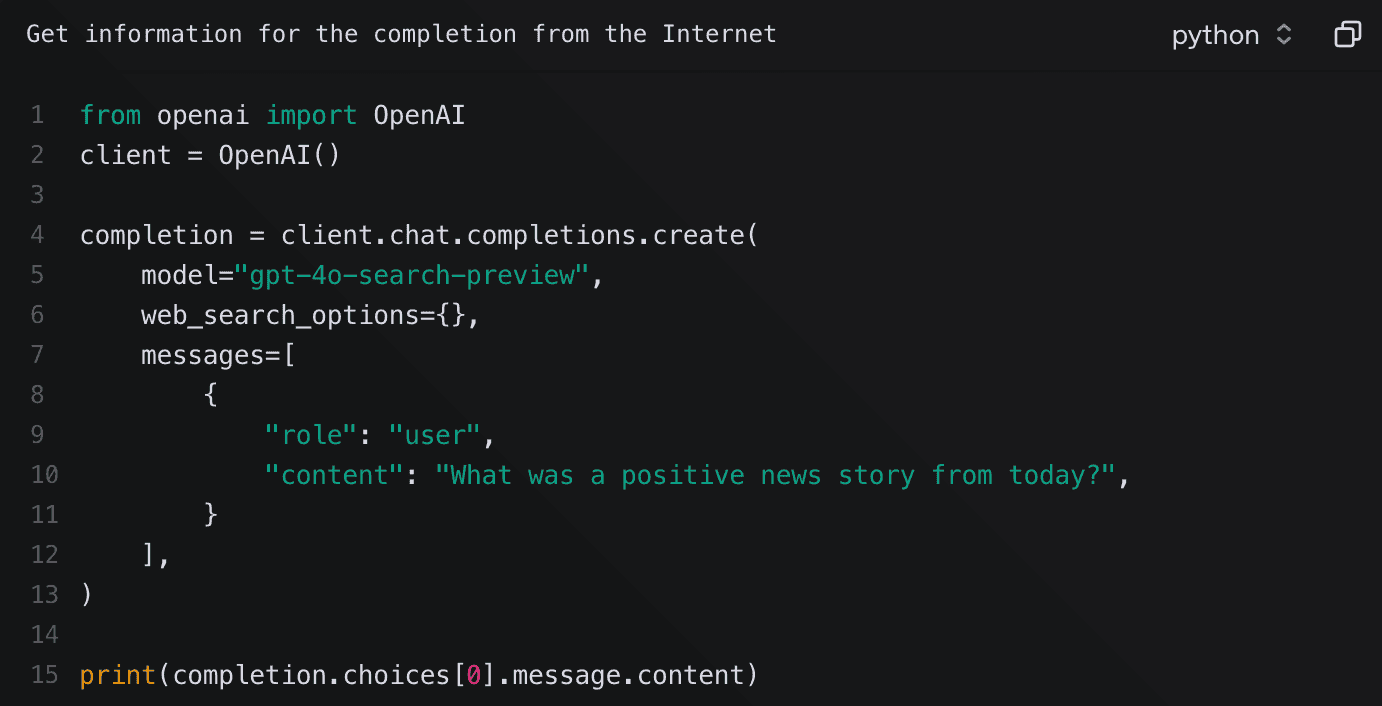
OpenAI Chat Completion API is a straightforward, highly accessible tool for developing conversational agents. With its intuitive interface and access to current multimodal models (e.g. GPT-4o family and successors), this API allows for quick implementation and easy setup for responsive chatbots. Whether you're building a simple FAQ bot or a more complex virtual assistant, OpenAI provides the flexibility to get up and running fast.
Key Benefits: Seamless integration with minimal setup, fast deployment, and strong language generation across many conversational scenarios.
LangChain Overview

LangChain (and adjacent patterns like LangGraph for graph-based agents) is an open-source ecosystem for building advanced LLM applications. Unlike OpenAI's API alone, which is plug-and-play at the model layer, LangChain helps you compose stateful systems with tools, retrieval, and orchestration. It excels at long-running conversations, external tool use, and context across many turns.
Key Benefits: Memory abstractions, agent workflows, and integration with vector stores, APIs, and enterprise data sources for multi-step flows.
Architecture and Design
OpenAI Chat Completion API follows a stateless architecture. Every interaction with the API is independent, meaning developers must manually handle conversation context by appending previous messages to the prompt. This approach is well-suited for simpler applications where minimal context tracking is required.
LangChain offers a highly modular and dynamic architecture. Its components—such as chains, agents, and memory modules—allow for more intricate dialogue management, enabling applications to maintain conversation history and provide a more personalized experience. The stateful architecture makes LangChain ideal for more sophisticated, context-aware chatbot implementations.
Key Features Comparison
| Feature | OpenAI Chat Completion API | LangChain |
|---|---|---|
| Ease of Use | High; minimal setup required for basic usage. | Moderate; requires understanding of components and frameworks. |
| Memory Management | Manual; developers manage context and memory. | Automated; built-in memory management and context tracking. |
| Tool Integration | Limited; requires manual integration of external tools. | Extensive; supports integration with external APIs, databases, and services. |
| Workflow Complexity | Best for simple, one-step workflows. | Ideal for complex, multi-step workflows with advanced logic. |
| Customization | Limited to API parameters. | Highly customizable with support for chains, agents, and modules. |
Scalability and Performance
OpenAI Chat Completion API is optimized for high throughput and fast response times. While it can handle a high volume of requests, handling very complex conversational workflows might require additional infrastructure and manual intervention.
LangChain is engineered for scalability. Its modular approach to building AI applications allows developers to create large-scale, robust systems capable of handling multiple, intricate workflows simultaneously. LangChain’s flexible design allows it to scale efficiently for enterprise-grade applications with advanced features.
Use Cases
OpenAI Chat Completion API is well-suited for:
- Building straightforward chatbots and virtual assistants
- Rapid prototyping and MVP development
- Simple question-answering systems
LangChain excels in:
- Managing complex, multi-turn conversations
- Creating AI systems that require memory and context management
- Integrating with third-party APIs for enhanced functionality and workflows
Ease of Use
OpenAI's Chat Completion API is renowned for its ease of use. Developers can quickly integrate it into applications with minimal setup and start building conversational agents. This makes it an excellent choice for quick projects and prototypes. On the other hand, LangChain, while more feature-rich, demands a steeper learning curve and more upfront effort to understand its components and fully leverage its capabilities.
Features and Flexibility
LangChain offers a superior degree of flexibility, with its support for memory management, advanced context handling, and extensive tool integration. This makes it a better choice for developers who need to create complex, long-running conversations with dynamic capabilities. OpenAI’s Chat Completion API, while effective for basic tasks, lacks the depth and customization options of LangChain, making it less suitable for intricate applications.
Integration Capabilities
LangChain stands out in terms of integration, as it supports seamless connectivity with a variety of external services, APIs, and tools, making it ideal for building complex, multi-functional chatbot systems. OpenAI’s Chat Completion API, while versatile, focuses primarily on language model interaction and has limited built-in support for integrating with external systems, requiring developers to handle integrations manually.
Community and Support
OpenAI benefits from an extensive community, documentation, and examples. LangChain in 2026 has a large ecosystem too—tutorials, integrations, and enterprise adopters—though depth still varies by component; expect to lean on both official docs and the broader agent/LLM community.
Cost Considerations
OpenAI uses a pay-per-token model, which allows for predictable costs based on usage. This model works well for simple chatbots and projects with clear usage patterns. LangChain, being open-source, doesn't incur costs for the framework itself, but integrating with third-party models or services could introduce variable costs. For large-scale systems, LangChain’s costs may vary depending on the infrastructure and external services used.
Conclusion
Both OpenAI’s Chat Completion API and LangChain (often with LangGraph for production agents) offer robust options for chatbots in 2026, but they target different needs. For simple bots with minimal setup and quick deployment, OpenAI’s API is often enough. For memory-heavy, tool-using, multi-step agents with retrieval and observability, LangChain remains a strong orchestration layer—pair it with the model provider you trust.