
A Different Front Door to Company Data
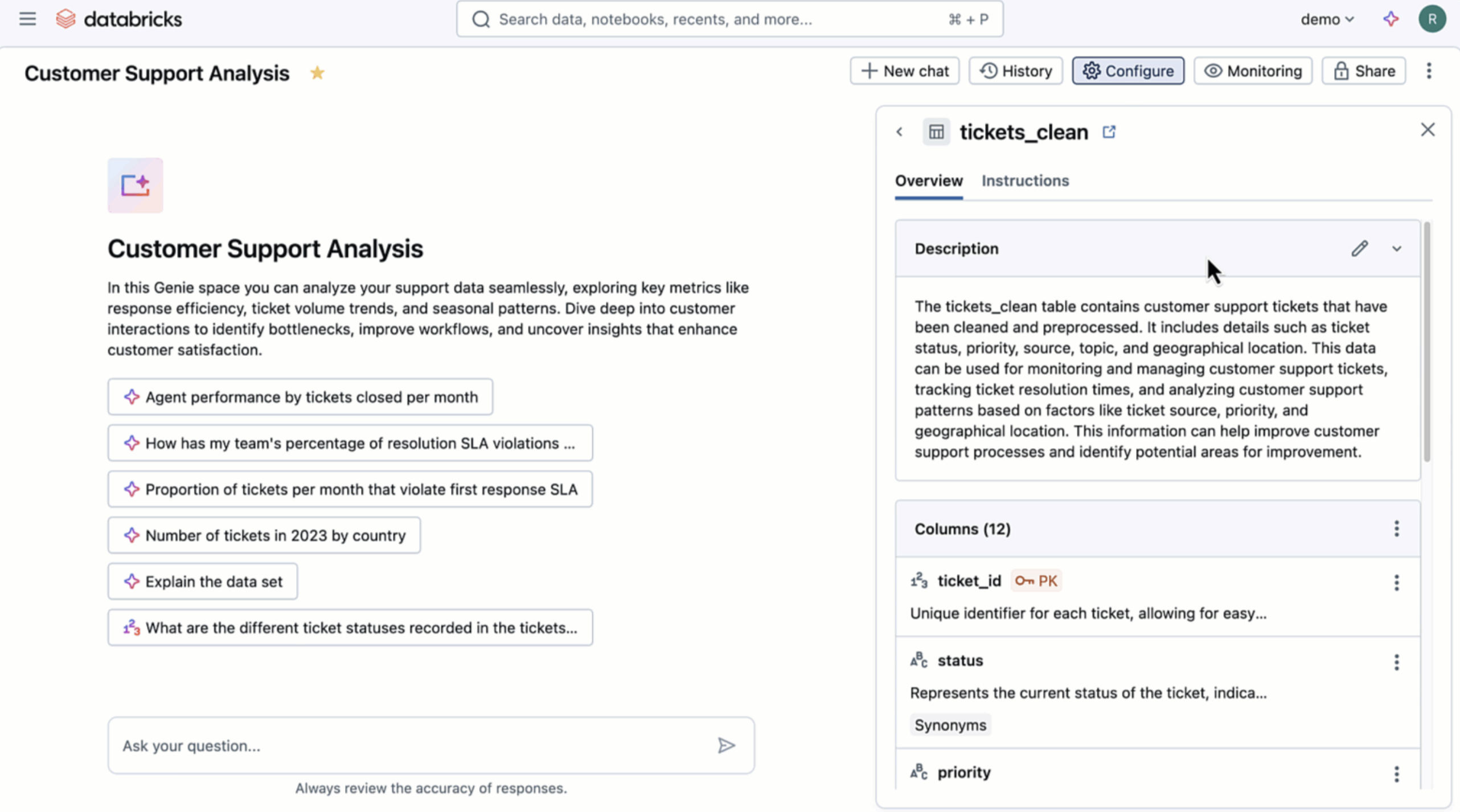
Most people with a business question do not want to begin with a reporting request. They want to ask, get the relevant numbers, and decide what to do next. Databricks AI/BI Genie is built for that moment: it lets users phrase a question naturally and returns a response based on the data prepared for their team.
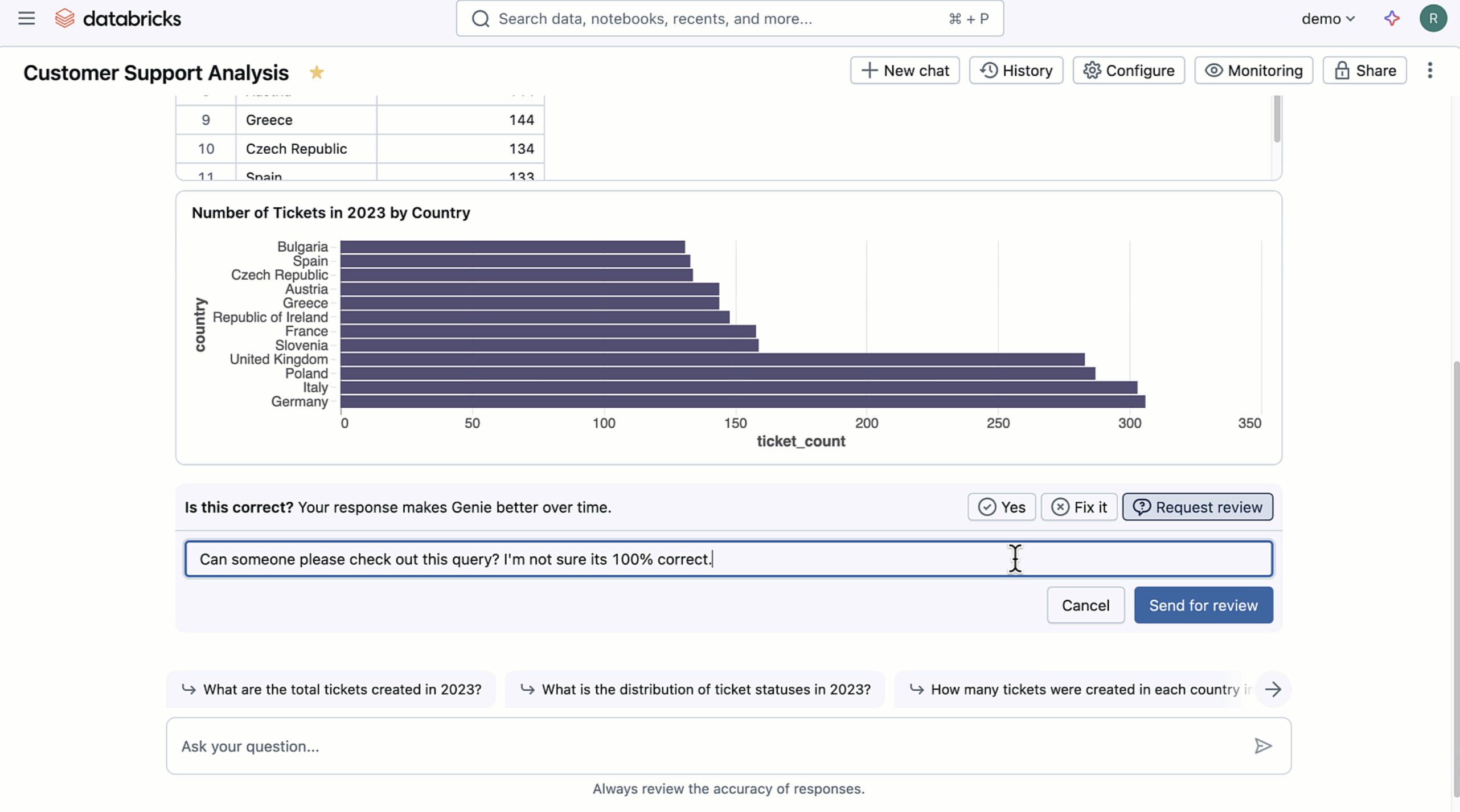
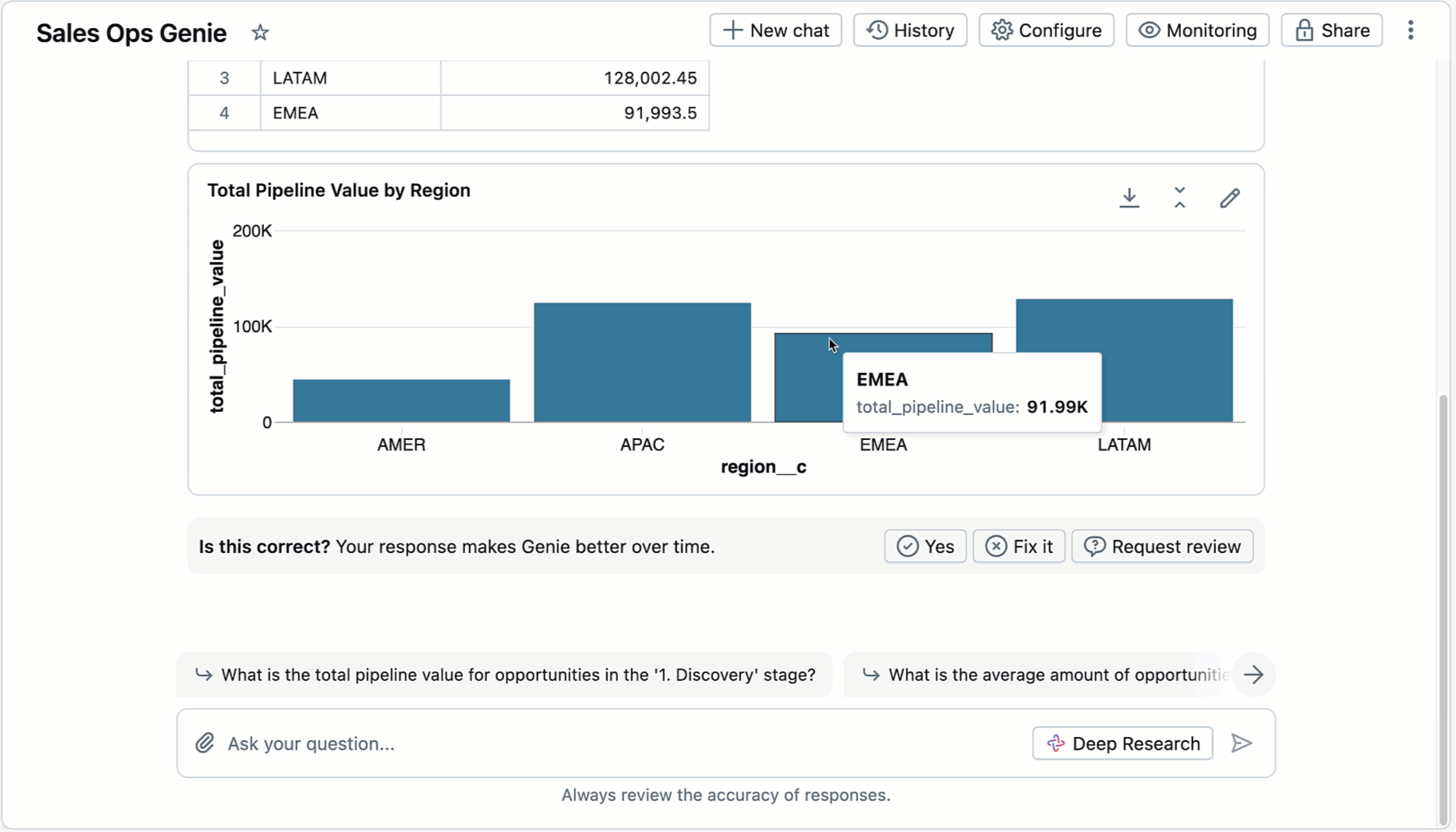
The reply can combine written context, a result table, and a chart. A commercial leader could explore deal movement, while an operations manager could look into a change in fulfilment performance, without needing to construct a query first.
Genie does not make data expertise unnecessary. It makes the work of data teams reusable by putting their definitions and approved assets behind an easier starting point for everyone else.
Why Reporting Alone Is Not Enough?
Scheduled reports and KPI dashboards are still essential. They give an organisation a consistent way to watch the measures it already knows matter. The problem appears when someone needs to ask the next, unplanned question.
That question can start a slow chain: search for a report, export data, contact an analyst, wait for a new view, then repeat the cycle for a follow-up. A conversational layer can shorten that cycle by letting a user explore safely within a defined data domain.
Think of Genie as an extension of a dashboard, not its replacement. Dashboards establish the common scorecard; Genie gives people room to investigate the detail around it.
The Answer Depends on the Data Story Behind It
Business language is rarely as tidy as a database schema. Teams use familiar shorthand, similar measures can have different calculation rules, and the labels stored in a system may not be the words people use in conversation.
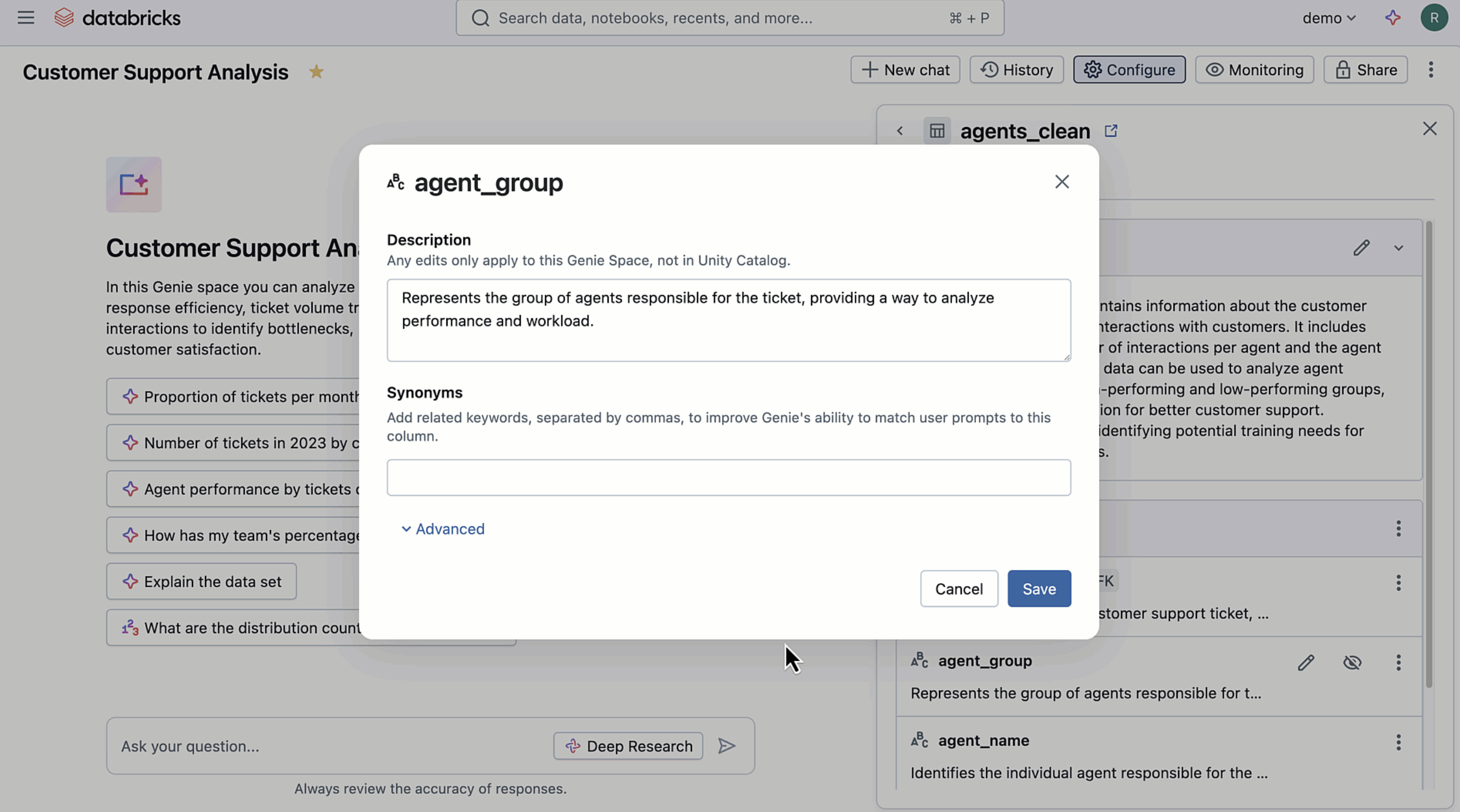
To bridge that gap, a Genie space can hold the information needed to interpret a domain correctly: relevant data assets, approved measures, instructions, example questions, and guidance about how concepts relate to one another.
This context is the difference between a quick answer and a useful one. Security rules, lineage, quality checks, access permissions, and agreed definitions remain the guardrails that allow people to act on the result with confidence.
Questions That Benefit From a Conversational Approach
The best first applications are not necessarily the largest ones. Start where people repeatedly need information, the data is understood, and a faster answer can remove friction from a real decision.
- Finance teams can examine spending changes, plan variance, and revenue movement.
- Revenue teams can inspect pipeline stages, campaign outcomes, customer groups, and conversion trends.
- Operations teams can look for causes of delayed orders, stock issues, or uneven service levels.
- People teams can explore approved workforce measures, such as staffing patterns and retention indicators.
In each case, the aim is the same: give the person closest to the question a practical way to explore trusted information, while preserving the controls around sensitive business data.
Trust Is Built Through Testing
A data assistant should earn trust through evidence, not through a polished response. Before a team depends on it, the system needs to be checked against the questions that users actually ask and the calculations those questions should produce.
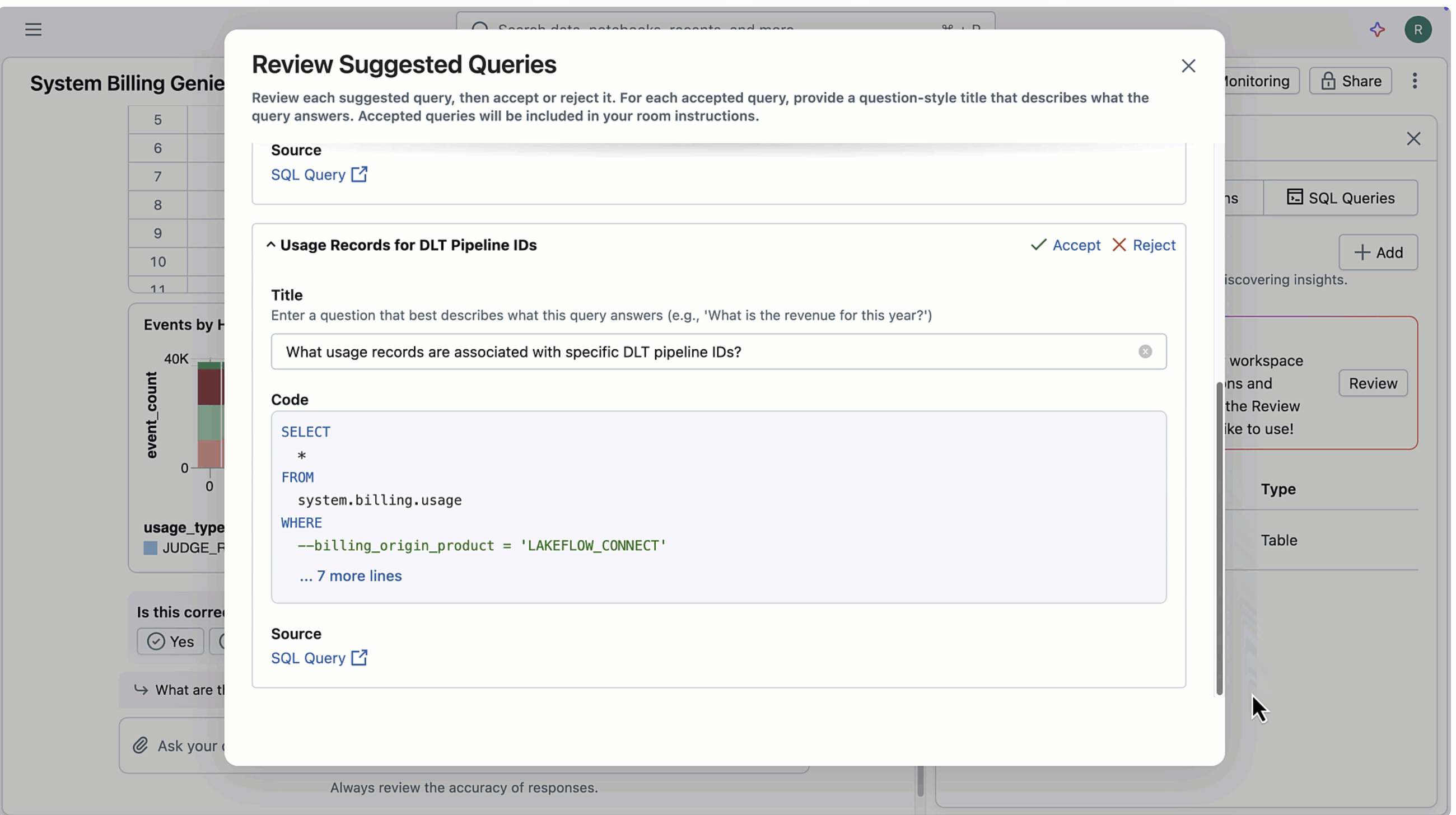
Databricks offers tools for testing expected query outcomes and for sending a response back for review. Those features work best when an organisation maintains a realistic question set, reviews exceptions, and assigns people who own the underlying business definitions.
Over time, missed questions become useful signals. They show where terminology is unclear, a metric needs better documentation, or the Genie space needs an additional example or instruction.
When the Question Needs Investigation, Not Just a Number
A metric can reveal that something changed, but it rarely explains the reason on its own. Once a team sees a decline in margin, engagement, or conversion, it usually needs to explore several possible causes before choosing a response.
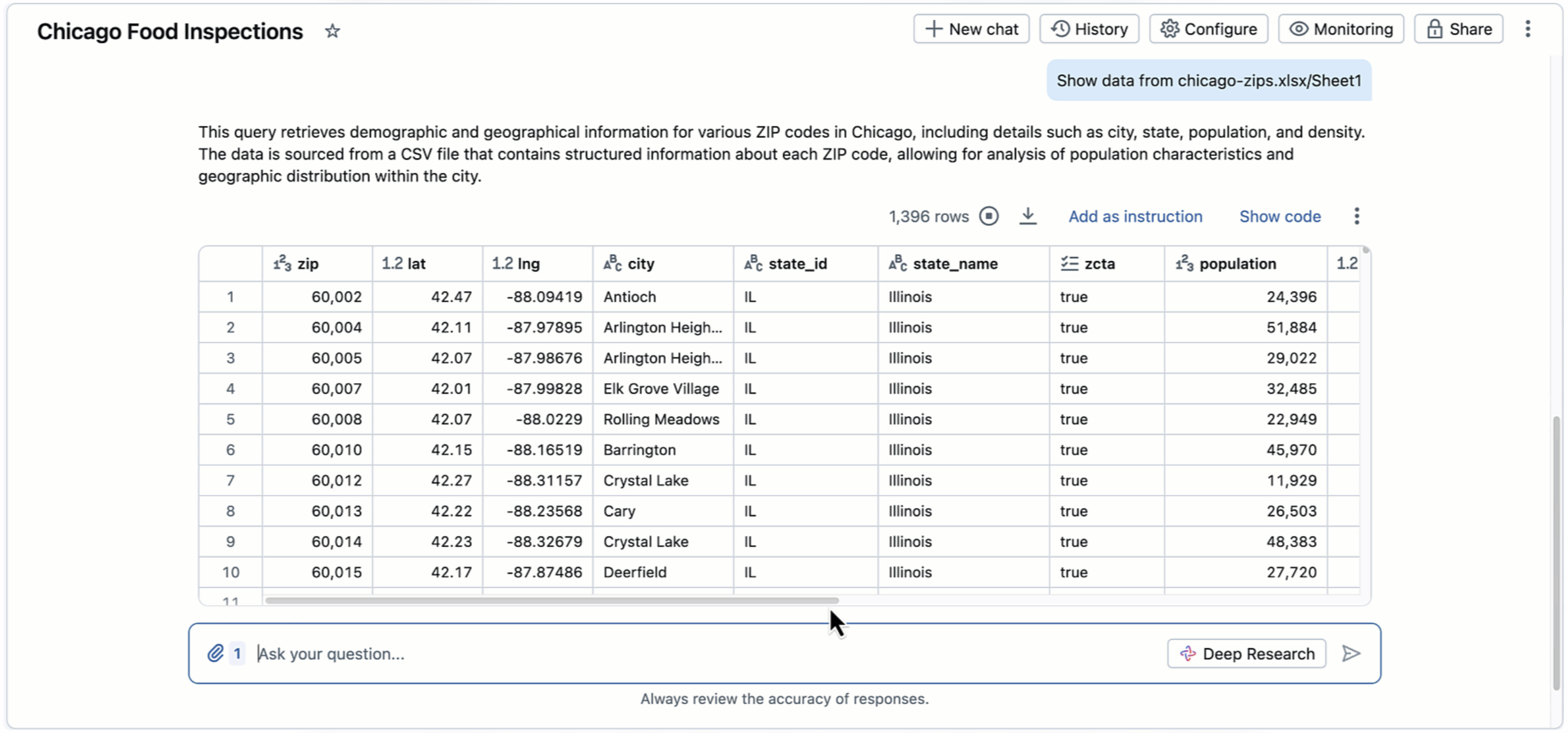
Databricks has announced a preview capability called Genie Deep Research for these broader investigations. The intended workflow is to organise a multi-step inquiry, assess more than one hypothesis, and make the supporting evidence easier to inspect.
That can accelerate exploration, but it should not bypass judgement. Material findings still need validation by the people who understand the operational and commercial context behind the data.
A Sensible Way to Roll It Out
Begin with a contained use case and prove value before expanding. A good pilot has an accountable business owner, trusted data sources, a small set of high-value questions, and a clear definition of success.
- Select one domain with an active reporting need.
- Document the vocabulary, formulas, data sources, and access rules for that domain.
- Test common and edge-case questions with subject-matter experts.
- Launch to a limited user group and make it easy to raise concerns.
- Use feedback to improve the space before offering it to a wider audience.
This measured approach protects confidence. It also gives the data team time to learn which questions matter most and where stronger context is required.
What This Means for Modern Analytics?
AI/BI Genie points to a more direct relationship between business teams and the data they are permitted to use. Instead of making every new question a ticket for an analyst, organisations can make a curated part of their data estate easier to explore.
The technology is most valuable when it works alongside strong data practices. Clear definitions, responsible access, review processes, and continuing measurement are what turn a conversational experience into a dependable part of decision-making.